
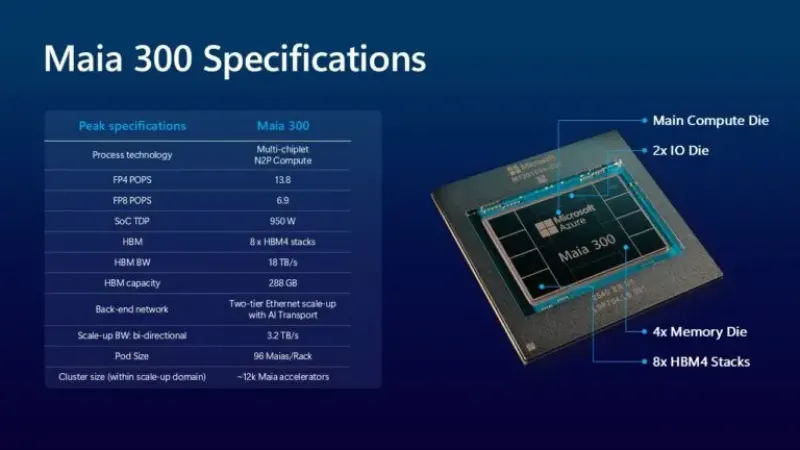
Microsoft presented the Maia 300, its third internally developed AI accelerator, in information that circulated this Tuesday (13). The chip is manufactured on the TSMC N2P process and delivers, according to reports, 40% more tokens per megawatt than GPUs. The announcement was highlighted by TechCrunch and AI Weekly. The most impactful news, however, is in the deployment plan: the company plans to put the Maia 300 into operation in gigawatt-scale data centers starting in 2027. The move signals that the company wants to expand its AI capacity without relying exclusively on third-party processors.
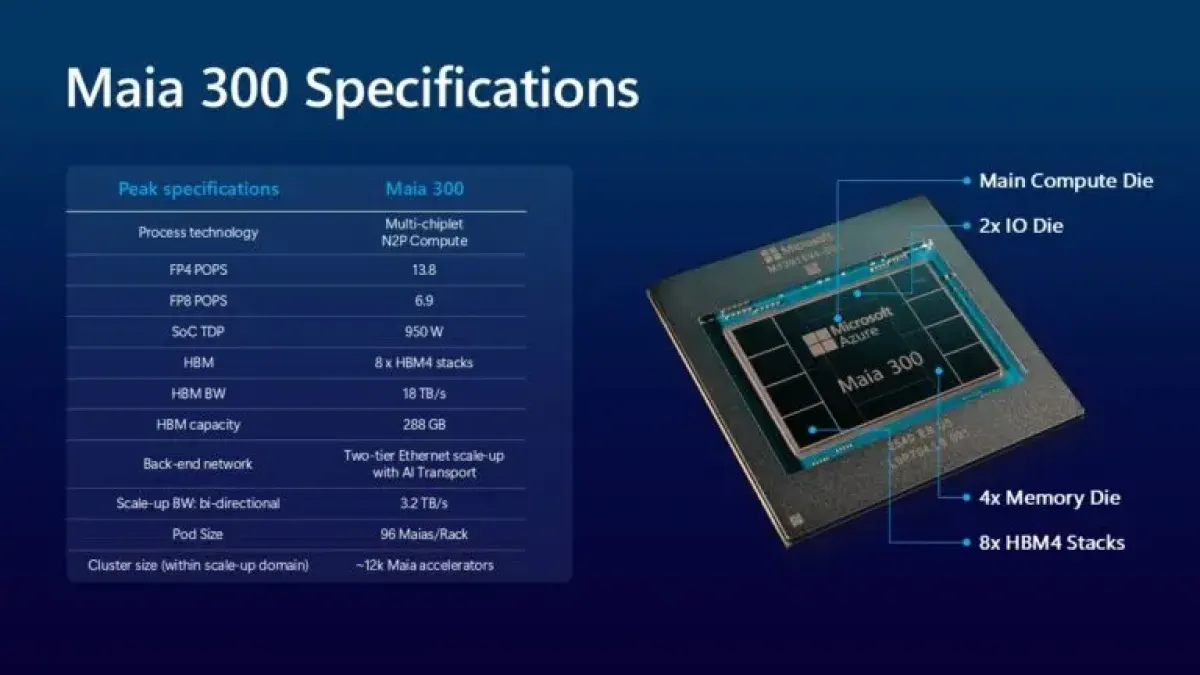
The choice of the TSMC N2P process places the Maia 300 at the forefront of semiconductor manufacturing, on an advanced node that prioritizes density and energy efficiency. The metric highlighted by Microsoft — tokens per megawatt — measures how much useful work the chip can generate per unit of energy consumed. Gaining 40% on this indicator compared to GPUs means producing more AI responses with the same slice of electricity. In a market where energy has become one of the main bottlenecks for expanding data centers, efficiency has ceased to be a technical detail and has become a competitive advantage. Not by chance, the comparison with GPUs was the central point of the disclosure.
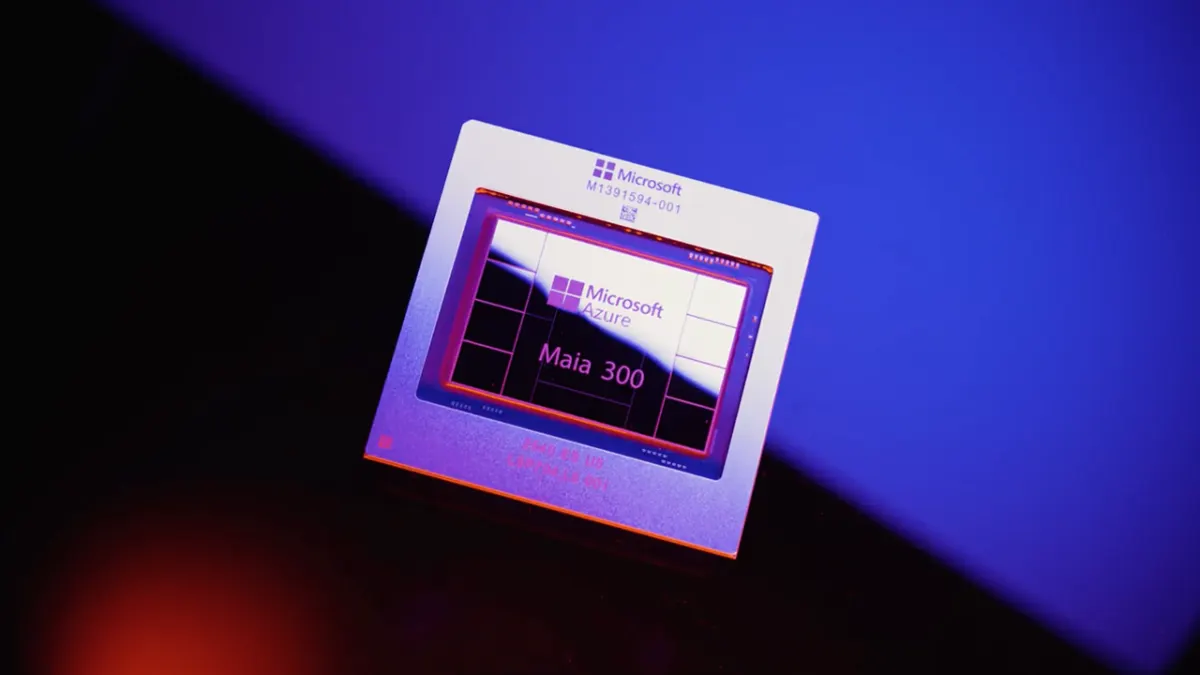
The commitment to gigawatt-scale deployment starting in 2027 gives the dimension of the bet. It is not an experimental laboratory chip, but hardware designed to support mass AI services within the Microsoft ecosystem. With this, the company follows the path of other big techs that design their own silicon to reduce costs and dependence on third-party GPUs. The Maia 300 is the third accelerator in the line, indicating continuous evolution of the company's internal chip program. The announcement, covered by TechCrunch and AI Weekly, confirms that the race for AI infrastructure is shifting more and more toward in-house hardware design.
In practice, performance per megawatt tends to weigh more than raw performance peaks when it comes to large-scale operation. AI data centers consume enormous volumes of electricity, and each percentage point of efficiency translates into operating cost and additional installed capacity. By promising 40% more tokens per megawatt, Microsoft is essentially buying room to grow within a limited energy matrix. The 2027 timeline also opens margin for the maturation of TSMC's N2P process and for internal software adaptation to the new chip. It remains to be seen how the Maia 300 will compare with rival solutions when it actually reaches data centers.
For the coming months, the points of attention are the confirmation of technical details and the production ramp timeline. The full specifications of the Maia 300 should emerge as the planned 2027 deployment approaches. What Tuesday's announcement already makes clear is the direction: less dependence on third-party GPUs and more control over cost, energy and scale. If the efficiency promise is confirmed in practice, the Maia 300 could become a central piece of Microsoft's AI infrastructure in the second half of the decade.
Comments 0
Login to Comment
You need to be logged in to join the discussion
Loading comments...
No comments yet
Login to be the first to comment!