
The Linux kernel 7.4 is expected to arrive with mainline support for three notebooks equipped with the Qualcomm Snapdragon X2 Elite chip, manufactured by ASUS, HP and Lenovo. The projection was published by Phoronix on Monday (12/10). Mainline support, in kernel vocabulary, means compatibility integrated directly into the main code maintained by Linus Torvalds. In practice, this eliminates the need for external patches, parallel repositories and custom builds for the hardware to work. It is the kind of advancement that turns Linux on these portables from a technical experiment into a real usage option.
The Snapdragon X2 Elite is Qualcomm's platform for personal computers and integrates the segment of ARM notebooks that competes with Apple's Macs. Machines of this type leave the factory designed for Windows, which historically puts Linux users at a disadvantage. Unlike the x86 universe, where standardization makes life easier for distributions, each ARM project requires case-by-case integration of firmware, drivers and peripherals. That is why support for these portables usually advances in stages, model by model. The Linux 7.4 cycle, according to Phoronix, should stand out precisely for the simultaneous entry of three major manufacturers: ASUS, HP and Lenovo.
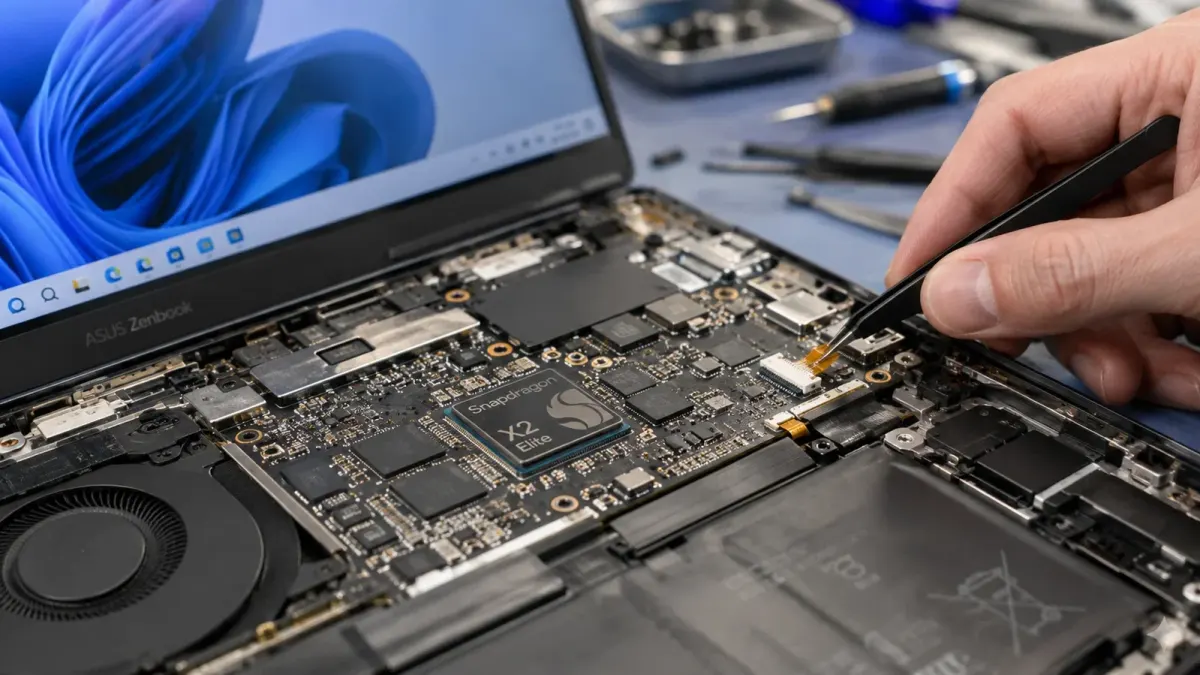
For those who have already tried installing distributions on recent ARM laptops, the known routine involves modified kernels, compatibility lists and manual tweaks. With the mainline support planned for Linux 7.4, this path tends to shorten, since the hardware will be recognized by the standard kernel. The gain is not only in convenience, but also in maintenance: kernel security updates will apply to these machines without extra work. Distributions also gain a more stable starting point for specific tests and refinements. In short, the hardware no longer depends on community patches and becomes part of the kernel that runs on almost everything, from servers to Android phones.
It is worth highlighting the conditional: Phoronix speaks of "expected to include", which reflects the state of the code in development branches, not an announcement of the final version. The kernel process is dynamic, and parts of the support may be adjusted throughout the cycle until the version is completed. Even so, the presence of ASUS, HP and Lenovo in the same batch indicates growing maturity of the ARM ecosystem on the penguin. For manufacturers, the move reduces one of the main barriers for those who see these notebooks as alternative workstations. Expectation remains for the next steps in the 7.4 cycle and for real tests on the three models.
Comments 0
Login to Comment
You need to be logged in to join the discussion
Loading comments...
No comments yet
Login to be the first to comment!